The development of Chinese women's underwear in history, from ancient times to modern times, has an interesting process of change. Each dynasty has different aesthetic values and inconsistent clothing standards, resulting in the diversity of underwear, which carries both heritage and changes. Underwea interprets people's constant pursuit of beauty and attention to comfort of different times. In today’s report, we're going to unravel the evolution of underwear.
In ancient times, underwear was called "xieyi", meaning the clothes of privacy, which can not be easily displayed. In the pre-Qin period, underwear was also called "ze". Ze is underwear when is worn on the body, it has tthe function of absorbing sweat. To the Han Dynasty, people called it "undershirt", There is a legend in which Liu Bang invented the "undershirt". When in the Chu Han war, Liu Bang returned from the battlefield, whose underwear has been soaked, and then jokingly called underwear for “undershirt”. We still follow the name of “undershirt” right now.
To ancient times, there were multiple historical stages, each with its own unique characteristics and forms. The following is an overview of the development of underwear in various periods:
《一》 Ancient times
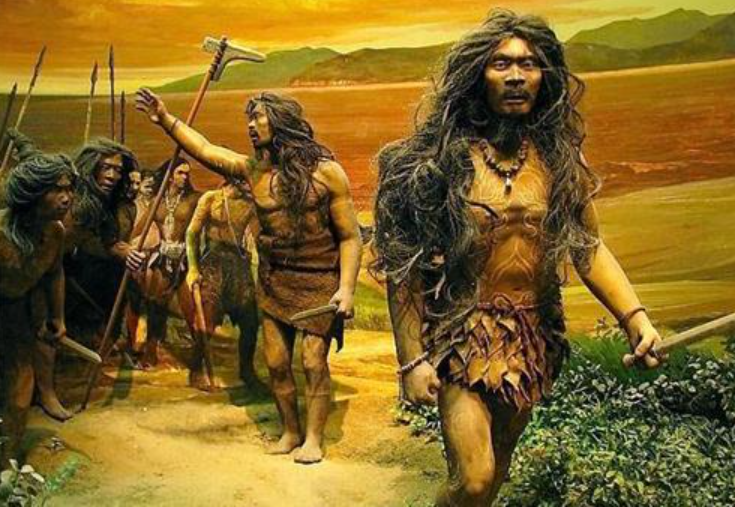
Human beings use animal skins, leaves and so on to make primitive underwear, the main function of these underwear is to shield and protect the body organs, but also enlightens the pursuit of human body beautification.
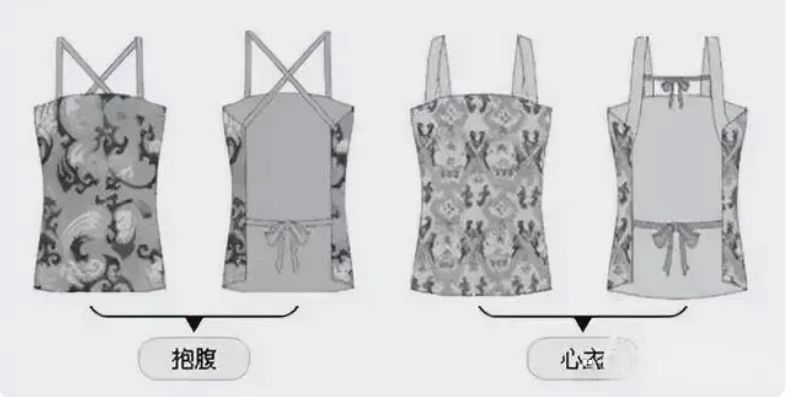
《二》"Fear of abdomen clothes", "hold abdomen clothes", "heart clothes" in Han Dynasty
Underwear in the Han Dynasty came in a variety of shapes, such as "Fear of abdomen clothes", "hold abdomen clothes", "heart clothes". "Fear of abdomen clothes" is simply a piece of cloth wrapped across the abdomen; The abdomen is simply wrapped across a piece of cloth with straps, when tightly holding its abdomen, called "holding the abdomen"; The "hook shoulder" and "crotch" on the belly are called "heart clothes". Liu Xi in Han worte "Explaining names": hold abdomen clothes with upper and lower belt holding the abdomen, no crotch also. Flat woven silk is a commonly used as underwear fabric in the Han Dynasty, which is often embroidered with colorful velvet patterns, and the patterns are mostly the theme of "love".
《三》Wei, Jin and Southern and Northern Dynasties
In the period of Wei, Jin, Southern and Northern Dynasties, due to the influence of ethnic integration, the form of underwear has also undergone great changes, and there has been a kind of underwear called “裲” crotch (two times). The so-called “裲” crotch, can both block the chest and also cover the back. “裲” the crotch can be worn inside or outside, which may be the earliest prototype of underwear worn outside. At the same time, the Han Dynasty appeared in the heart clothes, also continuing to the Wei and Jin periods, which is characterized by a wide style, easy to breathe, ventilation, and later women's chest is somewhat similar.
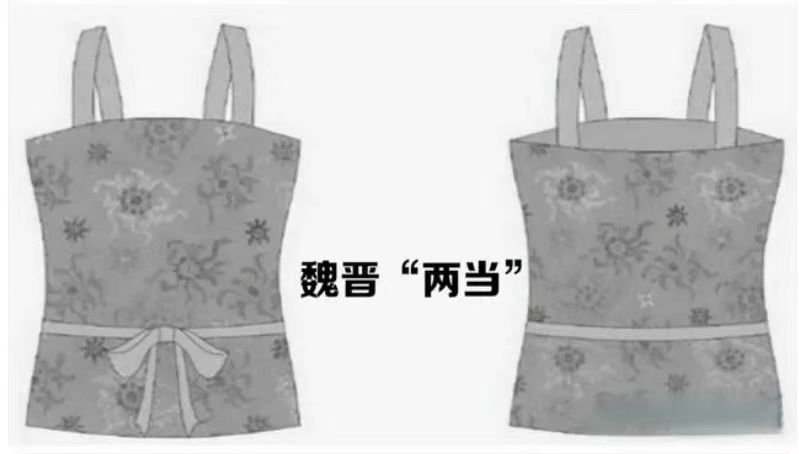

As can be seen from the above pictures, in the Han, Wei and Jin periods, underwear is no gender, men and women can wear the same style of underwear, and the boundary between underwear and outerwear is not very obvious. Wearing underwear to go outside is normal.
《四》"Chebula" in Tang Dynasty
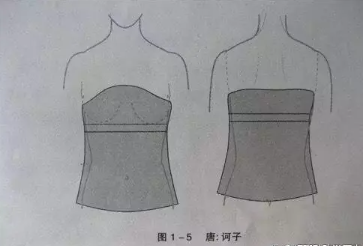
Women's underwear in the Tang Dynasty was called "kezi", which was characterized by a prominent figure and a “袔” child without a tie. “袔” is related to the Tang style when they tied the skirt high at the chest, then tied a broad band at the lower chest, exposing the shoulders, top chest and back, in order to highlight the figure, no strapless. Fabrics are mostly woven cotton, rich in color. Datang women's daily clothing is the shirt, jacket, skirt, most often wearing a jacket, jacket, shirt, and the lower body bundle skirt. Red is the most popular skirt, followed by purple, yellow and green. "kezi" commonly used fabric "woven", crisp and slightly elastic, which touches thick. When wearing, people tie two straps under the chest, and "weave" to ensure that the upper part of the chest of "kezi" achieves the effect of standing upright.
The Sui and Tang dynasties were regarded as the most open, powerful and prosperous period in ancient China. They had frequent exchanges with Persia, Dashi and other countries, as well as close contacts with various ethnic groups in the Northwest, which influenced the attire of the Tang people. At this time, women were less oppressed by etiquette, and the open atmosphere enabled women to bathe in the sun, enjoy life to the fullest and show the beauty of their bodies. Women in the Tang Dynasty were fat but beautiful, emphasizing the curvy beauty of the upper body.
《五》Song Dynasty "strapless underwear"
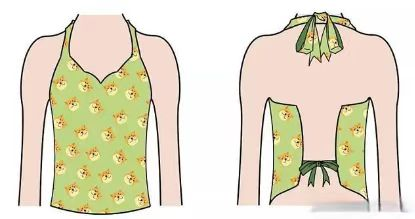
The Song Dynasty underwear is mainly popular with strapless underwear. They can cover the breast, the bottom can cover the belly, with two straps tied on the neck, two belts tied around the waist. Aristocratic families’ underwear are usually made of silk, some of which are decorated with colored embroidery, some plain face, no decoration, and ordinary people’s are mainly cotton, commonly known as native cloth.In the Song Dynasty, women had the habit of girdling their breasts. Women's daily clothes are: wearing a jacket, shirt, back, half arms, the lower body bundle skirt, pants. Its fabrics are luo, yarn, brocade, twill, silk and so on. After wearing "wipe the chest", "the upper breast can be covered under the belly", the whole chest and abdomen are covered, so it is also called "wipe the belly". Tie with buttons or straps. Ordinary people use cotton products, commonly known as native cloth, aristocratic families use silk products and embroidered flowers on it. Single clip, different forms.
《六》"Hehuan lapel" in Yuan Dynasty
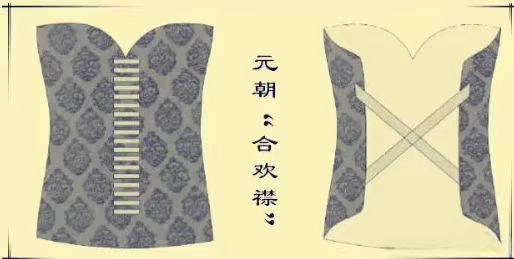
Yuan women's underwear is called "Hehuan flaperon", mostly in strapless forms. The Yuan Dynasty spring palace painting can be seen that the strspless underwear of the Yuan Dynasty is relatively loose, and the body is more sexy. At that time, the Mongolian are popular with the underwear style: there is a row of buttons in the chest, worn from the back to the front, and the fabric is mostly woven cotton. The Mongols entered the Central Plains, and both inherited the Han system in dress and carried out their own system. During the reign of Dade in the Yuan Dynasty, the clothes of the scholars in the Mongol and Han dynasties were adapted to their own convenience. As for Women's clothing, rich people use marten as clothes, wear fur hats. Generally, sheepskin and Cui felt were used as clothing materials. At that time, the style of the robe was wide and long, often used as a dress. The fabric of albizia flaperon is mostly made of brocade, and the pattern is continuous.
《七》Ming Dynasty - "Main waist" "diaphragm skirt"
The underwear of the Ming Dynasty is called "main waist" "diaphragm skirt". The main difference between stapeless underwear and Ming underwear is different coverage for the chest. The “main waist”, "main" is the meaning of buckle, emphasizing embroidery decoration. The “main waist” is long, similar in shape to the vest, with a crotch on the shoulder, a strap on the crotch, and a strap on the waist side, which plays a role in the waist and outlines the female figure. Women's clothing in the Ming Dynasty has regulations. Folk women can only use purple, and can not use gold embroidery. The robe can only use purple green, peach, and light colors, and can not use bright red, crow blue, and yellow. The ribbon is made of blue silk cloth. Ming clothes have appeared with buttons. It can be seen that women in the Ming Dynasty have a deep understanding of the way to show the figure.

《八》Qing Dynasty - "belly pocket"
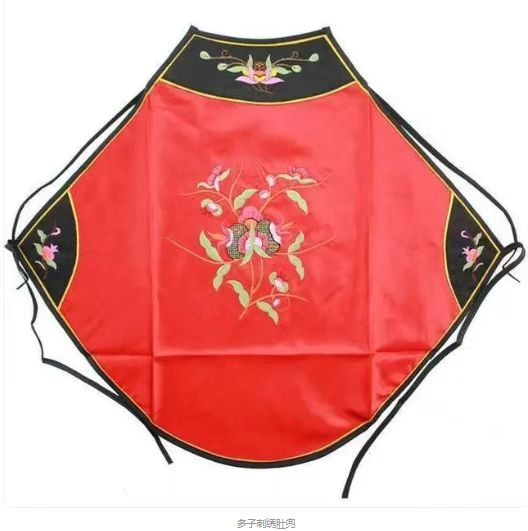
Underwear in the Qing Dynasty is called "belly pocket", which only has the front piece while does not have the back piece, generally made of diamond shape. There is a belt above. When worn in the neck, there are two straps in the waist behind, the following is an inverted triangle, covering the navel to reach the lower abdomen. The lace material is diverse. Rich people use gold chain, medium people use copper chain, and common people use red silk rope. The material is mainly cotton and silk. There are all kinds of exquisite embroidery on the "belly pocket".
《九》The Republic of China - "Little Vest"
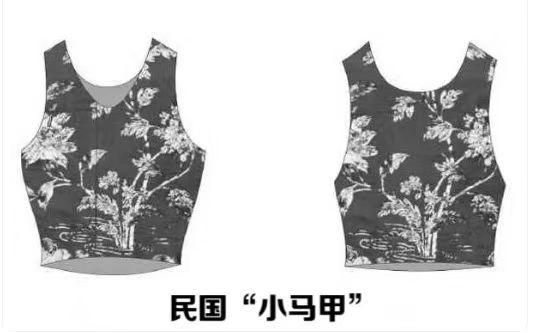
In the 1920s, Western culture was gradually introduced into China, influenced by it, the social fashion was strong. Yarn and cloth were introduced into our country, and the beauty of corsets was gradually highlighted. By the 1930s and 40s of the 20th century, the small waistcoat became fashionable and popular, the style was narrow and small, using the form of a front, and the chest and waist were wrapped tightly when worn, highlighting the chest and waist. The "little vest" further developed and absorbed some Western characteristics to become the current bra. The fabrics are mainly cotton and silk.
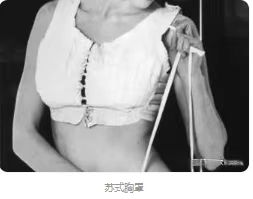
《十》1950s - 1970s - "Soviet style bra"
In the early days of the founding of the country, influenced by ideology, our country was on good terms with the Soviet Union, and clothing was also influenced by it, and underwear was mainly Soviet-style bras.
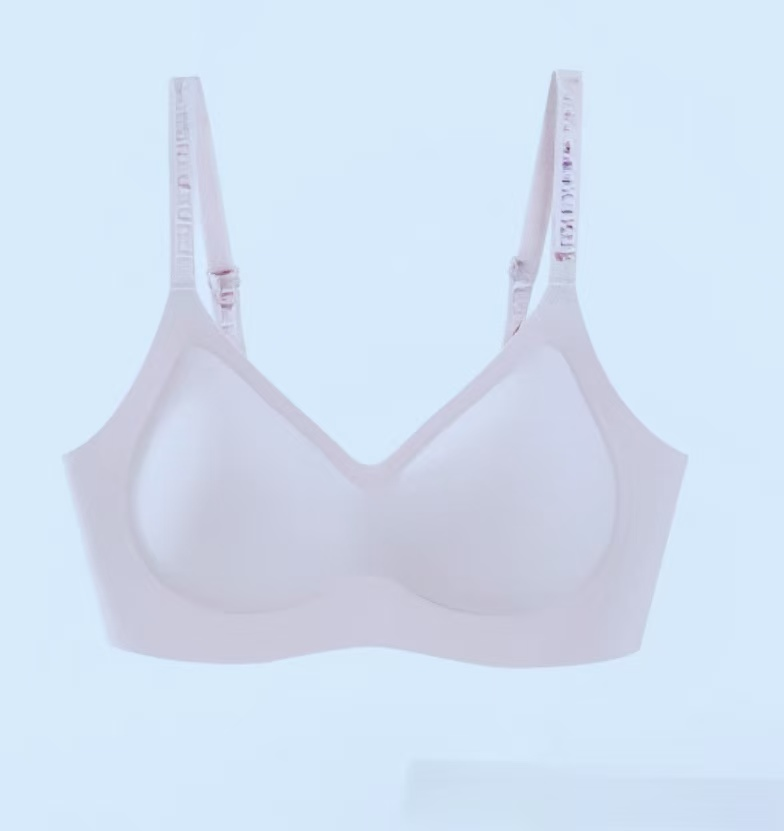
《十一》21st Century - "Thin, transparent, leaky"
In the 21st century, with the progress and development of science and technology, women’s underwear culture is also a situation of contention. The color style functions from single to diversified, so it further highlights the charm of The Times.
Through the review of the history of Chinese women's underwear, this report interprets Chinese women's curvy beauty. No matter in terms of style, material, color, or pattern, all of which are constantly developing and changing. Nearly two thousand years of underwear culture shows the improvement of Chinese people's aesthetic standards for women's bodies. The wheel of history rolls by, but the pursuit of beauty has never stopped.
